Table of Contents
Overview
Key Principles of Aerodynamics
Aerodynamics is fundamentally concerned with the behavior of air as it interacts with solid objects, particularly those in motion. The study of aerodynamics encompasses several key principles that govern the forces acting on bodies moving through air. One of the most significant principles is Bernoulli's principle, which describes the relationship between pressure, density, and flow velocity in a fluid. This principle is essential for understanding how lift is generated by airfoils, although it does not fully account for lift generation in all scenarios, such as with symmetric airfoils at certain angles of attack.[12.1] In aerodynamics, the conservation of momentum is a fundamental concept of physics, alongside the conservation of energy and mass. Momentum is defined as the product of an object's mass and its velocity. According to the conservation of momentum, within a defined problem domain, the total amount of momentum remains constant; it is neither created nor destroyed but can only change forms.[11.1] This principle plays a crucial role in understanding the dynamics of airflow around objects, particularly in the design of airfoils. The interaction of momentum with other aerodynamic principles, such as Bernoulli's principle, is essential for generating lift in aviation applications.[11.1] The four aerodynamic forces of flight—weight, lift, drag, and thrust—are also foundational to the study of aerodynamics. Sir George Cayley, a pioneer in the field, was the first to identify these forces and their interrelationships, laying the groundwork for modern aeronautical engineering.[6.1] Understanding these forces is critical for the design and operation of aircraft, as they dictate the performance and stability of flying vehicles. Furthermore, advancements in Computational Fluid Dynamics (CFD) have significantly enhanced the ability to analyze and optimize aerodynamic performance. CFD allows engineers to simulate airflow over aircraft wings, leading to improved designs that enhance lift and reduce drag, ultimately contributing to greater efficiency and safety in aviation.[10.1] As computational power and simulation techniques continue to evolve, the integration of machine learning and artificial intelligence into CFD processes promises even more precise aerodynamic modeling and optimization.[9.1]History
Early Developments
The early developments in aerodynamics can be traced back to the pioneering work of Sir George Cayley, who is often referred to as the "Father of Aerodynamics." In the late 1800s, Cayley introduced fundamental concepts such as fixed wings and rudders, which were crucial for the design of successful gliders.[74.1] His experiments laid the groundwork for understanding the principles of propulsion in aviation, significantly influencing the evolution of aircraft engines in subsequent years.[69.1] Cayley's research culminated in the construction of various models, including a triplane glider that successfully carried a young boy aloft, demonstrating the basic principles and configuration of modern airplanes.[68.1] The advancements in aerodynamics during World War I marked a significant turning point in aviation history. The war catalyzed innovations in aircraft design, aerodynamics, and engine technology, leading to the development of specialized roles for different types of military aircraft, such as fighters and bombers.[65.1] The experiences gained during this period facilitated a deeper understanding of how aircraft interact with the surrounding air, resulting in designs that enhanced military effectiveness and set the stage for future advancements in both military and civilian aviation.[66.1] Following World War I, the evolution of fighter jets exemplified the intersection of engineering and tactical innovation. Aircraft like the Lockheed P-80 Shooting Star introduced advanced aerodynamics and jet propulsion, which significantly improved engagement capabilities.[63.1] The post-war boom in civilian aviation was also influenced by these advancements, as innovations in navigation and aircraft design paved the way for commercial air travel.[62.1] The legacy of World War I aviation innovations continues to resonate in contemporary aerospace engineering, shaping the design of both military and civilian aircraft.[66.1]Key Contributors and Milestones
The history of aerodynamics is significantly shaped by the pioneering work of Sir George Cayley, who is often referred to as the "Father of Aviation." Cayley, who began his investigations into flight as early as 1796, is credited as the first person to identify the four aerodynamic forces of flight: weight, lift, drag, and thrust, along with their interrelationships.[53.1] He also developed the concept of the modern fixed-wing aircraft, recognizing that the wings of earlier ornithopter designs were insufficient for creating the necessary lift for heavier-than-air flight.[77.1] His innovative designs often placed the center of gravity below the wings, which contributed to the stability of the craft in flight.[78.1] In 1853, Cayley successfully constructed and tested a human-carrying glider, which demonstrated the principles of stability and control, marking a significant milestone in the quest for sustained flight.[78.1] His work laid the groundwork for future advancements in aviation, emphasizing the need for lightweight engines to achieve sufficient thrust and lift.[77.1] In the 1930s, the National Advisory Committee for Aeronautics (NACA) made a pivotal advancement with the development of the NACA airfoil. This innovation significantly improved lift-to-drag ratios and became a standard in aircraft design, reflecting a crucial shift in aerodynamic understanding that influenced modern aviation.[51.1] The advancements during this period were further propelled by the demands of World War I, which highlighted the importance of air power and led to rapid technological developments in airplane design.[54.1] Another key figure in the evolution of aerodynamics was Dr. Ludwig Prandtl, whose theories have had a lasting impact on the field. Prandtl's work, motivated by the research of the Lilienthal brothers and the Wright brothers, established foundational theories that are still utilized in the design of practical aircraft today.[56.1] His contributions, along with those of Dutch-Swiss mathematician Daniel Bernoulli, who formulated Bernoulli's principle in 1738, provided essential insights into the relationship between pressure, density, and flow velocity, which are critical for calculating aerodynamic lift.[57.1]Recent Advancements
Technological Innovations
Recent advancements in aerodynamics have been propelled by technological innovations that enhance aircraft design and performance. A key development is the blended wing body (BWB) aircraft, which merges the fuselage, wings, and engines into a single lifting surface, optimizing aerodynamic efficiency by reducing drag and improving fuel economy compared to traditional designs.[97.1] Despite its benefits, the BWB concept poses challenges, such as stability and control issues due to the absence of conventional control surfaces.[99.1] Advancements in materials science have also been pivotal in improving aerodynamic efficiency. The adoption of lightweight materials, including advanced composites and aluminum alloys, has become widespread in aircraft construction, leading to reduced weight and lower fuel consumption.[95.1] These materials enhance the strength-to-weight ratio and durability, while also offering improved corrosion resistance, thereby optimizing aircraft performance.[95.1] Emerging smart materials, such as shape-memory alloys, are set to redefine aerospace engineering by offering enhanced performance and sustainability.[91.1] The integration of computational fluid dynamics (CFD) has transformed aerodynamic research and design processes. CFD enables precise modeling and analysis of airflow around aircraft, facilitating innovative solutions to complex aerodynamic challenges.[89.1] As the aviation industry evolves, these technological advancements are expected to drive further improvements in aerodynamic efficiency, contributing to more sustainable aviation practices.[88.1]In this section:
Applications
Aviation
Aerodynamics is fundamental to the field of aviation, influencing the design and performance of aircraft. The principles of aerodynamics are applied extensively in the design of aircraft wings, fuselages, and tails to ensure optimal lift, minimal drag, and maximum fuel efficiency.[133.1] This application is critical not only for the performance of commercial airliners but also for military and cargo aircraft, where efficiency and performance are paramount. The integration of Computational Fluid Dynamics (CFD) has revolutionized aircraft design by allowing engineers to optimize aerodynamic performance through detailed simulations. CFD technology enables the reduction of drag and improvement of fuel efficiency, which are essential for modern aircraft operations.[136.1] By simulating airflow over various aircraft designs, engineers can refine configurations to enhance stability and ensure safe operations under diverse conditions.[137.1] Moreover, advancements in high-performance computing have further enhanced the capabilities of CFD in aviation. Companies like Airbus are collaborating with research institutions to develop industry-ready CFD codes that improve the understanding of aerodynamics and its impact on aircraft efficiency.[138.1] This collaboration aims to push the boundaries of aircraft design, leading to innovations that enhance speed, efficiency, and environmental sustainability.[137.1]Automotive Engineering
Automotive engineering has significantly benefited from advancements in aerodynamics, particularly through the application of computational fluid dynamics (CFD). CFD serves as a cornerstone for enhancing vehicle performance by enabling engineers to analyze airflow patterns and optimize vehicle designs for reduced drag and improved fuel efficiency.[139.1] This technology has been instrumental in redesigning vehicle components, as exemplified by the Cyber Truck, where CFD was utilized to optimize the casting process, resulting in a lighter, stiffer, and more efficient structure.[140.1] Moreover, companies like Volvo Cars have leveraged CFD to conduct multiple simulations daily, allowing for rapid evaluation of various design variants and facilitating significant improvements in design optimization.[141.1] The impact of aerodynamics is also evident in successful case studies, such as the Tesla Model S, which features a sleek silhouette and optimized underbody, achieving an impressive drag coefficient of only 0.24.[145.1] Other notable examples include the elongated shape of the Tesla Model S and the sleek silhouette of the Porsche 911, both of which exemplify optimal aerodynamic design principles aimed at maximizing efficiency and performance.[146.1] In addition to static design elements, active aerodynamic systems have emerged as a transformative aspect of modern automotive design. These systems dynamically adjust components like spoilers and grille openings based on real-time driving conditions, optimizing airflow and reducing drag. For instance, adjustable spoilers can change their angle to enhance aerodynamic performance at varying speeds.[147.1] The evolution of car aerodynamics reflects a broader trend in the automotive industry, transitioning from a focus on aesthetics and mechanical function to a modern emphasis on advanced CFD and sustainable design practices. This journey highlights the continuous exploration of innovative methods to reduce drag and improve vehicle efficiency, underscoring the critical role of aerodynamics in automotive engineering.[148.1]In this section:
Environmental SustainabilityAutomotive EngineeringDesign OptimizationCase StudiesAesthetics
Fundamental Concepts
Fluid Dynamics
Aerodynamics is fundamentally concerned with the behavior of air and other gaseous fluids as they interact with solid bodies, focusing primarily on the forces of drag and lift that arise from this interaction.[167.1] The study of fluid dynamics within aerodynamics encompasses several key principles that explain how air behaves around objects, particularly in the context of aircraft design and performance.[168.1] One of the foundational concepts in fluid dynamics is Bernoulli's principle, which describes the relationship between pressure, density, and flow velocity for incompressible flow. This principle is crucial for understanding how lift is generated, as it explains that faster airflow over a wing creates lower pressure above the wing compared to the higher pressure below it, resulting in an upward lift force.[15.1] However, it is important to recognize that lift generation is influenced by a broader set of factors, including air density, lift coefficient, airspeed, and Newton's third law of motion.[13.1] In addition to Bernoulli's principle, the Euler equations, published by Leonhard Euler in 1757, provide a more general framework applicable to both compressible and incompressible flows, which is essential for modern aerodynamics research, especially in the design of aircraft for supersonic and hypersonic conditions.[166.1] The ongoing research in aerodynamics also addresses complex issues such as flow turbulence and the analytical solutions to the Navier-Stokes equations, which are fundamental to understanding fluid motion.[167.1] Computational Fluid Dynamics (CFD) has emerged as a transformative tool in the field of aerodynamics, allowing engineers to simulate fluid behavior around aircraft designs. This technology enables the optimization of aerodynamic performance by reducing drag and improving fuel efficiency, while also facilitating rapid design iterations and reducing the need for physical prototypes.[188.1] CFD's ability to provide detailed insights into aerodynamic phenomena supports informed decision-making and enhances the overall safety and performance of modern aircraft.[189.1]Gas Dynamics
Gas dynamics is a crucial aspect of aerodynamics that examines the behavior of gases in motion, particularly in relation to the forces acting on objects moving through them. One of the fundamental principles in gas dynamics is the effect of viscosity on airflow around an airfoil. Viscosity plays a significant role in the transition from laminar to turbulent flow, as it introduces friction between the moving air and the airfoil. This friction generates a boundary layer, which results in the conversion of some potential energy into kinetic energy and internal energy, leading to temperature changes due to friction losses.[197.1] In addition to its implications for airfoil design, gas dynamics also informs urban planning strategies aimed at improving air quality. Innovative approaches, such as the establishment of green zones—areas designated for parks, gardens, and urban forests—are essential for mitigating air pollution. These green spaces function as natural air purifiers by absorbing pollutants and releasing oxygen, thereby enhancing the overall air quality in densely populated areas.[209.1] Furthermore, urban designs that incorporate advanced monitoring and data analysis can lead to sustainable strategies for managing urban air quality. By implementing these strategies, cities can effectively reduce air pollution while simultaneously improving the livability and health of urban environments.[210.1]In this section:
Challenges And Future Directions
Environmental Impact
Sustainable design practices in aerospace engineering are essential for mitigating environmental impacts and fostering a more sustainable future for the industry. Key principles include enhancing fuel efficiency, utilizing alternative fuels, and integrating advanced technologies to minimize emissions. These practices are crucial for reducing the overall environmental footprint of aviation and improving operational efficiency.[215.1] Recent innovations in aerodynamics have significantly contributed to sustainable flight by focusing on reducing drag, enhancing lift, and improving fuel efficiency. These advancements not only drive technological progress but also play a vital role in addressing the environmental challenges posed by aviation.[216.1] However, the implementation of these innovative aerodynamic designs faces challenges that must be navigated to fully realize their potential benefits.[216.1] The sourcing of eco-friendly materials for aerospace manufacturing is another critical aspect of sustainability. Aerospace companies are encouraged to continuously evaluate their practices and explore new eco-materials to further diminish their environmental impact. Events such as the Sustainable Manufacturing Expo facilitate knowledge sharing and collaboration, which are essential for advancing the use of lightweight eco-materials and innovative manufacturing processes.[217.1] The development and adoption of Sustainable Aviation Fuels (SAF), Lower Carbon Aviation Fuels (LCAF), and other cleaner aviation energies are anticipated to contribute significantly to the reduction of aviation CO2 emissions by 2050. While there are increasing initiatives aimed at enhancing the production and deployment of these fuels, the current production levels remain a challenge. The success of these initiatives is contingent upon technological advancements and the establishment of supporting infrastructure and regulatory frameworks.[236.1] These frameworks are essential for facilitating the adoption of sustainable practices in aviation, yet challenges may arise in the effective implementation of these regulations.[236.1]Emerging Technologies
Emerging technologies in aerodynamics are set to significantly reshape aircraft design and performance, driven by ongoing research and technological advancements. Future trends in aerodynamics promise to enhance performance and efficiency, focusing on innovative aerodynamic shapes that minimize drag and improve fuel efficiency across various aircraft designs.[219.1] The integration of lightweight and high-strength materials, including bio-composites derived from biological sources, is crucial for enhancing the environmental performance of modern aircraft.[224.1] These materials not only contribute to improved aerodynamic performance but also facilitate innovative designs that streamline airflow, thereby further enhancing efficiency.[222.1] As the aviation industry continues to embrace these advancements, the future landscape of aerodynamics is poised for transformative changes that will lead to a more sustainable future for air travel.[219.1] The integration of artificial intelligence (AI) algorithms and machine learning (ML) into computational fluid dynamics (CFD) is enhancing the accuracy and efficiency of aerodynamic simulations. Recent reviews discuss the application of AI in five key aspects of CFD, including aerodynamic models and turbulence models, which are essential for improving simulation outcomes.[225.1] Specifically, the study on ML integration in CFD focuses on enhancing turbulence modeling, thereby contributing to more effective aerodynamic analyses.[226.1] This advancement in turbulence modeling is expected to play a significant role in the overall improvement of aerodynamic simulations. Government initiatives play a crucial role in promoting these advancements by providing funding and support for research and development in sustainable aerodynamic designs.[221.1] As the aviation industry continues to embrace these emerging technologies, the future of aerodynamics is set to revolutionize aircraft design, enhancing both performance and sustainability while addressing the pressing challenges of climate change.[220.1]In this section:
Sustainable FutureAlternative FuelsTechnologiesEnvironmental FootprintOperational Efficiency
References
[6] History of aerodynamics - Wikipedia — Working from at least as early as 1796, when he constructed a model helicopter, until his death in 1857, Sir George Cayley is credited as the first person to identify the four aerodynamic forces of flight—weight, lift, drag, and thrust—and the relationships between them. Cayley is also credited as the first person to develop the modern fixed-wing aircraft concept; although da Vinci's notes contain drawings and descriptions of a fixed-wing heavier-than-air flight machine, da Vinci's notes were disorganized and scattered following his death, and his aerodynamics achievements were not rediscovered until after technology had progressed well beyond da Vinci's advances.
[9] Computational Fluid Dynamics (CFD) in Modern Aircraft Desi - AVI-8 ... — As computational power and simulation techniques advance, the future of Computational Fluid Dynamics (CFD) in aircraft design holds promise for even greater precision, scalability, and integration with emerging technologies such as artificial intelligence (AI) and machine learning. These advancements will further enhance predictive capabilities, optimize complex multi-physics interactions, and
[10] Computational Fluid Dynamics (CFD) and Its Role in Aviation — Computational Fluid Dynamics (CFD) has revolutionized many industries, but its impact on aviation is particularly profound. By simulating the behavior of fluids—such as air over an airplane wing—CFD allows engineers to optimize aircraft designs, reduce costs, and enhance safety.
[11] Conservation of Momentum - NASA — The conservation of momentum is a fundamental concept of physics along with the conservation of energy and the conservation of mass.Momentum is defined to be the mass of an object multiplied by the velocity of the object. The conservation of momentum states that, within some problem domain, the amount of momentum remains constant; momentum is neither created nor destroyed, but only changed
[12] What Is Bernoulli's Principle? A Simple Guide for Pilots — Bernoulli's principle does a good job of explaining the theory behind lift, but it doesn't completely explain how the wing generates lift. If lift were entirely due to Bernoulli, a symmetric airfoil (one with equal curvature on top and bottom) wouldn't generate lift - yet it does when given the right angle of attack.
[13] Understanding Lift and Bernoulli's Principle in 5 Minutes — Understanding Bernoulli's Principle is crucial for anyone that wants to really understand lift. At the same time though, it's important to recognise that this principle is part of a broader set of factors influencing lift, including air density, lift coefficient, airspeed, Newton's 3rd law, and wing surface area.
[15] 2.972 How An Airfoil Works - MIT — The wings provide lift by creating a situation where the pressure above the wing is lower than the pressure below the wing. Since the pressure below the wing is higher than the pressure above the wing, there is a net force upwards. ... One method is with the Bernoulli Equation, ... D.R., Aircraft Flight: a description of the physical principles
[51] Understanding Aerodynamics in Aerospace Engineering — Key Milestones in the Understanding of Aerodynamics. One key milestone was the development of the NACA airfoil in the 1930s. The National Advisory Committee for Aeronautics (NACA) created airfoil shapes that improved lift-to-drag ratios. These airfoils became standard in aircraft design.
[53] History of aerodynamics - Wikipedia — Working from at least as early as 1796, when he constructed a model helicopter, until his death in 1857, Sir George Cayley is credited as the first person to identify the four aerodynamic forces of flight—weight, lift, drag, and thrust—and the relationships between them. Cayley is also credited as the first person to develop the modern fixed-wing aircraft concept; although da Vinci's notes contain drawings and descriptions of a fixed-wing heavier-than-air flight machine, da Vinci's notes were disorganized and scattered following his death, and his aerodynamics achievements were not rediscovered until after technology had progressed well beyond da Vinci's advances.
[54] A Brief History of Aviation: Milestones in the Development of Airplanes — A Brief History of Aviation: Milestones in the Development of Airplanes - Reference.com From the early dreams of human flight to the sophisticated airplanes we see today, this article explores significant milestones that have shaped aviation as we know it. World War I saw rapid advancements in airplane technology as nations recognized air power’s importance. After World War I, aviation entered a Golden Age during the 1920s and 1930s characterized by increased public interest in air travel. However, blocking some types of cookies may impact your experience of the site and the services we are able to offer. If you do not allow these cookies then some or all of these services may not function properly.
[56] History of Aerodynamics — N o one has done more for aerodynamics than Dr. Ludwig Prandtl from the University of Göttingen, Germany. He was born in 1874 and lived to 1953. Motivated by the flights and research of the Lilianthal brothers and the Wrights, Prandtl formulated a large number of major theories which were and are still being used today to design practical aircraft. These theories include: 1
[57] Aerodynamics - Wikipedia — Dutch-Swiss mathematician Daniel Bernoulli followed in 1738 with Hydrodynamica in which he described a fundamental relationship between pressure, density, and flow velocity for incompressible flow known today as Bernoulli's principle, which provides one method for calculating aerodynamic lift. In 1757, Leonhard Euler published the more general Euler equations which could be applied to both compressible and incompressible flows. Designing aircraft for supersonic and hypersonic conditions, as well as the desire to improve the aerodynamic efficiency of current aircraft and propulsion systems, continues to motivate new research in aerodynamics, while work continues to be done on important problems in basic aerodynamic theory related to flow turbulence and the existence and uniqueness of analytical solutions to the Navier–Stokes equations.
[62] Innovations in Aviation During World War I: A Historical Analysis — In civilian aviation, World War I advances spurred a post-war boom, where innovations in navigation and aircraft design paved the way for commercial air travel.
[63] Historical Aircraft Innovations: A Journey Through Time — The evolution of fighter jets in the post-war period further exemplifies the intersection of engineering and tactical innovation. Aircraft such as the Lockheed P-80 Shooting Star introduced advanced aerodynamics and jet propulsion, enhancing engagement capabilities.
[65] Technology Innovations in World War I Airplane Design — World War 1 began with the airplane as a frail, unarmed means of observing enemy troop movements and ended with the airplane as a powerful, much more evolved weapon of war. There were specialized roles for fighter, bomber and ground attack aircraft as well as newly developed aerial strategies and tactics for operational effectiveness.
[66] Innovations in Aviation During World War I: A Historical Analysis — From pioneering aircraft designs to significant improvements in engine technology, the era showcased a remarkable array of World War I aviation innovations. Overall, World War I aviation innovations facilitated a deeper understanding of how aircraft interact with the surrounding air, resulting in designs that significantly enhanced military effectiveness and heralded a new era in aviation history. In summary, the incorporation of the Lewis Gun and Vickers Machine Gun into military aircraft epitomized the advancements in World War I aviation innovations, laying the groundwork for future aerial warfare strategies. As a result, the legacy of World War I aviation innovations continues to resonate in contemporary aerospace engineering, influencing both military and civilian aircraft design.
[68] Sir George Cayley - Making Aviation Practical - Centennial of Flight — Thus, one hundred years before the Wright brothers flew their glider, Cayley had established the basic principles and configuration of the modern airplane, complete with fixed wings, fuselage, and a tail unit with elevators and rudder, and had constructed a series of models to demonstrate his ideas. George Cayley's 1804 glider design.By 1808, Cayley had constructed a glider with a wing area of almost 300 square feet (28 square meters). He carried a young boy aloft in this aircraft.Four years later, in 1853 and fifty years before the first powered flight was made at Kitty Hawk, North Carolina, Cayley built a triplane glider (a glider with three horizontal wing structures) that carried his coachman 900 feet (275 meters) across Brompton Dale in the north of England before crashing.
[69] Sir George Cayley - Father of Aerodynamics - loveair.co.uk — Many advancements in aviation can be attributed to the pioneering work of Sir George Cayley, a prominent figure in the history of aeronautics. Cayley’s research laid a solid foundation for understanding the principles of propulsion in aviation, guiding the evolution of aircraft engines in the years to come. Not only did Sir George Cayley revolutionize the field of aerodynamics during his time, but his work continues to inspire future aviators and innovators in the field of aviation. Another notable recognition of Sir George Cayley’s contributions to aviation history is the establishment of the Cayley Award, given annually by the Royal Aeronautical Society in his honor. On the whole, Sir George Cayley’s pioneering work in aeronautics laid the foundation for modern aviation as we know it today.
[74] The History of Aviation: From Leonardo da Vinci to Modern Innovations — Late 1800s: Sir George Cayley, often called the "Father of Aerodynamics," developed the first successful gliders, introducing concepts such as fixed wings and rudders. ... A Legacy of Innovation. The history of aviation is a testament to humanity's relentless pursuit of innovation and exploration. From da Vinci's sketches to the era of
[77] Sir George Cayley: Paving the Way for Modern Aviation — Sir George Cayley: Paving the Way for Modern Aviation - Aviation History - Century of Flight Cayley, the true father of modern aviation, was the first to succeed in heavier-than-air flight and construct a human-carrying glider. Airplane concepts of the time were built with flapping wings (these contraptions were referred to as ornithopters) until Cayley determined that the wings of ornithopters weren’t shaped in a way that could create sufficient lift for objects heavier than air. Sir Cayley drew out his newest design on a silver medal, which included the flight-governing forces on one side and a model of the forces working together on the other side. Cayley made the correct assessment that sustained flight wouldn’t be possible unless the aviation industry could design and manufacture a lightweight engine for planes that would allow sufficient thrust and lift.
[78] Sir George Cayley and the Science of Aviation — On Verticality — Many of Cayley's designs placed the center of gravity below the wings, which helped to stabilize the craft in flight, and the cockpit on this craft did just that. This glider design was built and successfully tested in 1853, with an adult aviator in the cockpit. Sir George Cayley has been called the Father of Aviation.
[88] Redesigning Aircraft: A New Era of Aerodynamics - Medium — The redesign of aircraft is ushering in a new era of aerodynamics, driven by advances in technology, sustainability, and innovation. As the aviation industry continues to evolve, we can expect
[89] Historical Advances in Aerodynamics: A Journey Through Time — These milestones reflect crucial shifts that shaped modern approaches to aircraft design, demonstrating the integral role of historical advances in aerodynamics in shaping contemporary aviation. Overall, the impact of computational fluid dynamics on aerodynamics research cannot be overstated, as it has revolutionized the methods employed in the design and analysis of aircraft, allowing for innovative solutions to challenging aerodynamic problems. The demand for advanced military aircraft necessitated innovative designs that could exploit aerodynamic efficiency and performance metrics. The integration of technology in aerodynamics has fundamentally transformed the field, facilitating unprecedented advancements in both research and aircraft design. As we look to the future, the integration of machine learning and artificial intelligence into aerodynamic research will facilitate more efficient design processes and predictive modeling, enhancing aircraft performance and safety.
[91] Advancements Shaping the Future of Aerospace Material Technology — Innovations like the use of lower energy-consuming techniques in the production of aerospace components contribute to the overall sustainability goals in the industry, ultimately shaping the future of aerospace material technology. In the realm of aerospace material technology, cost efficiency and speed in production significantly enhance the industry’s ability to meet growing demands. As the future of aerospace material technology evolves, the integration of smart materials offers promising benefits, including improved performance, reduced weight, and enhanced sustainability. As the future of aerospace material technology unfolds, shape-memory alloys promise innovative solutions that enhance efficiency and performance, solidifying their role in advancing aerospace engineering. Advancements in aerospace material technology are poised to redefine the industry, fostering more efficient, sustainable, and innovative designs.
[95] Aerospace Manufacturing: Advanced Materials for Future Flight — Advanced materials redefine aerospace engineering by improving strength-to-weight ratios, corrosion resistance, and durability, enabling longer flight durations, increased fuel efficiency, and improved safety. This article explores the significance of advanced materials in aerospace applications, focusing on composites, titanium alloys, superalloys, and other next-generation substances. Continuous advancements in material science enhance the efficiency, durability, and performance of flight systems, ensuring that superalloys remain at the forefront of aerospace engineering. While composites and titanium dominate today’s aerospace industry, new materials are emerging to push the boundaries of performance further. Baker Industries specializes in advanced CNC machining, fabrication, and 3D printing, which are key in manufacturing intricate aerospace components with exceptional accuracy and dependability.
[97] Engineering Marvels: Delving into Blended Wing Body (BWB ... - Medium — This design offers several potential advantages, including improved aerodynamic efficiency, reduced drag, and increased fuel economy compared to traditional tube-and-wing configurations. A blended
[99] PDF — n of the wing structure with the thick central body. The main drawback to the blended wing body concept is that it lacks control surfaces and conventional stabilizing surfaces such as a tail making it unstable and difficult to control. Most importantly the international aviation operation contributes 2-3% to the global warming phenomena (Lee, Fahey et al. 2009). If aviation remains on its
[133] Aerodynamics: Principles, Applications and Innovations — Aerodynamics plays a pivotal role in various fields, from aviation and automotive engineering to sports and architecture. Aviation: The most obvious application of aerodynamics is in aviation. The design of aircraft wings, fuselages and tails is based on aerodynamic principles to ensure optimal lift, minimal drag and maximum fuel efficiency.
[136] Why Computational Fluid Dynamics is Key to Aircraft Design — The Power of Computational Fluid Dynamics (CFD) in Aircraft Design How CFD Works in Aircraft Design One of the most significant ways CFD improves aircraft design is through the optimization of aerodynamics. By utilizing CFD technology, they were able to reduce drag, improve fuel efficiency, and ensure that the aircraft would perform well in a variety of conditions. By optimizing aerodynamics using CFD, aircraft designers can reduce drag, which directly leads to lower fuel consumption. The information gathered from CFD simulations allows engineers to fine-tune the aircraft’s design to improve stability and ensure smooth, safe operations. While wind tunnels are still helpful, CFD has revolutionized the way engineers design and test aircraft. The Future of CFD in Aircraft Design
[137] Computational Fluid Dynamics (CFD) in Modern Aircraft Desi - AVI-8 ... — Cost and Time Efficiency: Virtual testing with CFD reduces the need for physical prototypes and wind tunnel testing, saving time and development costs.Design Iteration: Engineers can explore numerous design variations and scenarios rapidly, refining aircraft configurations to achieve optimal performance goals.Accuracy and Predictability: Computational Fluid Dynamics (CFD) provides detailed insights into aerodynamic phenomena and performance metrics, supporting informed decision-making and risk mitigation in aircraft development.Innovation and Performance Enhancement: Computational Fluid Dynamics (CFD) enables the exploration of novel design concepts and innovative technologies, pushing the boundaries of aircraft efficiency, speed, and environmental sustainability.
[138] Aerodynamics and the art of aircraft design - Airbus — Aerodynamics and the art of aircraft design | Airbus Airbus Enabled by high-performance computing, advances in flow simulation are helping Airbus to improve aircraft efficiency 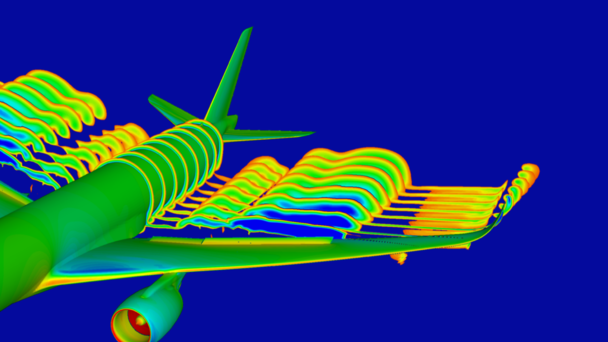 In this spirit Airbus, DLR and ONERA, two leading European research institutions, are exploring how high-performance computing can improve our understanding of the relationship between aerodynamics and aircraft efficiency. “We’re developing a new generation CFD code that is ‘industry-ready’ for flow prediction and equally applicable to aircraft, helicopters and space systems.” Airbus has access to some of the highest-performing extreme-scale computational systems in the world to help develop and validate the code, helping boost engineers’ confidence in their predictions. 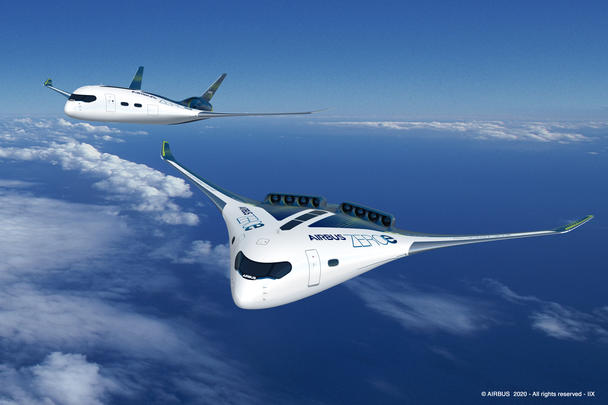 Airbus Aircraft & Services
[139] Enhancing Automotive Design Through Computational Fluid Dynamics ... — Computational fluid dynamics (CFD) plays a pivotal role in automotive aerodynamics, serving as a cornerstone for enhanced vehicle performance. Through advanced simulations, engineers can analyze airflow patterns, enabling them to optimize vehicle design for reduced drag and improved fuel efficiency.
[140] CFD in Automotive Design: The Future of Innovation | Tparts — CFD has played a crucial role in redesigning vehicle components. By simulating fluid dynamics, engineers have optimized the casting process. For example, the Cyber Truck's casting was redesigned using CFD. The result? A lighter, stiffer, and more efficient structure. This technology is now being applied to other models, further enhancing their performance.
[141] Volvo Cars Leverages Ansys and NVIDIA GPUs to Accelerate CFD ... — The technology combination can allow Volvo Cars to run multiple CFD simulations per day, evaluating a range of design variants to quickly enable a step change in design optimization.
[145] Innovations in Advanced Aerodynamics Design for Automotive Excellence — The application of advanced aerodynamics design in the automotive sector can be observed through several successful case studies. One notable example is the Tesla Model S, which employs a sleek silhouette and optimized underbody features to achieve an impressive drag coefficient of only 0.24.
[146] Understanding Aerodynamics in Vehicle Design for Optimal Performance — Popular examples include the elongated shape of the Tesla Model S or the sleek silhouette of the Porsche 911, both showcasing optimal aerodynamic design principles to achieve peak efficiency and performance. Innovators in automotive design continuously experiment with new shapes and contours to enhance aerodynamic properties.
[147] The Science of Car Aerodynamics Improving Performance and Efficiency — Active aerodynamic systems are a game-changer in modern automotive design. These systems dynamically adjust elements like spoilers and grille openings based on real-time driving conditions to optimize airflow and reduce drag. Adjustable spoilers, for example, change their angle to provide optimal aerodynamic performance at different speeds.
[148] The Evolution of Car Aerodynamics Over the Decades — Published December 4, 2024By Dana PhioCategorized as Featured No Comments on The Evolution of Car Aerodynamics Over the Decades The evolution of car aerodynamics has played a pivotal role in shaping the automotive industry, influencing vehicle design, performance, and fuel efficiency. From the early days of automotive design, where aesthetics and mechanical function were the primary focus, to the modern era of advanced computational fluid dynamics and sustainable design, the journey of car aerodynamics reflects the broader trends and innovations in the industry. These post-war innovations laid the foundation for further advancements in aerodynamics, as automakers continued to explore new ways to reduce drag and improve vehicle efficiency. Tagged Aerodynamic Innovation, Auto Design History, Automotive Engineering, Car Aerodynamics, Car Design Evolution, Vehicle Efficiency
[166] Aerodynamics - Wikipedia — Dutch-Swiss mathematician Daniel Bernoulli followed in 1738 with Hydrodynamica in which he described a fundamental relationship between pressure, density, and flow velocity for incompressible flow known today as Bernoulli's principle, which provides one method for calculating aerodynamic lift. In 1757, Leonhard Euler published the more general Euler equations which could be applied to both compressible and incompressible flows. Designing aircraft for supersonic and hypersonic conditions, as well as the desire to improve the aerodynamic efficiency of current aircraft and propulsion systems, continues to motivate new research in aerodynamics, while work continues to be done on important problems in basic aerodynamic theory related to flow turbulence and the existence and uniqueness of analytical solutions to the Navier–Stokes equations.
[167] Aerodynamics - History, Principles, Law, Branches and FAQs - Vedantu — Aerodynamics is mainly concerned with the forces of drag and lift induced by air flowing over and through solid bodies since air is the most common gas we experience. Designing aircraft for supersonic and hypersonic flight, as well as the desire to improve the aerodynamic efficiency of current aircraft and propulsion systems, continue to drive new aerodynamics research, while work on important problems in basic aerodynamic theory such as flow turbulence and the existence and uniqueness of analytical solutions to the Navier-Stokes equation continues. Weight, lift, thrust, and drag are the four principles of aerodynamics. Aerodynamics is a branch of physics that studies the motion of air and other gaseous fluids, as well as the forces that act on objects moving through them.
[168] Aerodynamics: Understanding Air and Motion — Core Principles of Aerodynamics. Aerodynamics rests on a handful of key principles that explain how air behaves around objects. Below, we explore the foundational concepts that drive this science. Lift. Lift is the upward force generated when air flows over a curved surface, like an airplane wing. Bernoulli's principle explains how faster air
[188] Why Computational Fluid Dynamics is Key to Aircraft Design — The Power of Computational Fluid Dynamics (CFD) in Aircraft Design How CFD Works in Aircraft Design One of the most significant ways CFD improves aircraft design is through the optimization of aerodynamics. By utilizing CFD technology, they were able to reduce drag, improve fuel efficiency, and ensure that the aircraft would perform well in a variety of conditions. By optimizing aerodynamics using CFD, aircraft designers can reduce drag, which directly leads to lower fuel consumption. The information gathered from CFD simulations allows engineers to fine-tune the aircraft’s design to improve stability and ensure smooth, safe operations. While wind tunnels are still helpful, CFD has revolutionized the way engineers design and test aircraft. The Future of CFD in Aircraft Design
[189] The role of computational fluid dynamics (CFD) in aircraft design — Tinoco* Boeing Commercial Airplane Group Seattle, Washington, USA ABSTRACT The application of Computational Fluid Dynamics (CFD) to the design of commercial transport aircraft has revolutionized the process of aerodynamic design. 10 100 1,000 10,000 Wind tunnel CFD Number of simulations Cost, Flowtime One complete airplane development requires about 2.5 million aerodynamic simulations Typical Design Project CFD Wind Tunnel Fig. 1 - Cost and Flowtime Characteristics of Wind Tunnels and CFD CFD has had its greatest impact in the aerodynamic design of the high-speed cruise configuration of a transport aircraft. American Institute of Aeronautics and Astronautics Together, CFD and the wind tunnel have led to design solutions and improved aerodynamic performance that would otherwise not be achievable within the available time and budget of an aircraft development project.
[197] fluid dynamics - Lift of an airfoil: viscous vs inviscid results ... — Viscosity introduces another place for energy to go. The friction between the moving air and the airfoil creates the boundary layer, which means some of the energy gets converted from potential energy (aka total pressure) into kinetic energy (the velocity) and internal energy (temperature changes due to friction -- this is where friction losses
[209] The Impact of Urban Planning on Air Quality - homesight.org — The concept of green zoning is another innovative urban planning strategy aimed at improving air quality. Green zones are areas designated for green spaces, such as parks, gardens, and urban forests, which are essential for mitigating air pollution. Vegetation in green spaces acts as natural air purifiers by absorbing pollutants and releasing
[210] The Blueprint for a Sustainable Urban Air Quality Strategy - Clarity — These innovative urban designs, supported by Clarity's advanced monitoring and data analysis, pave the way for sustainable urban air quality strategies. By embracing these approaches, cities can not only reduce air pollution but also enhance the livability and health of urban environments. The power of community engagement in air quality
[215] Sustainable Practices in Aerospace Engineering — When it comes to sustainable design practices in aerospace engineering, there are several key principles that engineers must consider to reduce environmental impact and create a more sustainable future for the industry. Sustainable aircraft design focuses on reducing emissions by improving fuel efficiency, using alternative fuels, and implementing advanced technologies to minimize environmental impact. In general sustainable design practices in aerospace engineering play a crucial role in reducing environmental impact, improving efficiency, and creating a more sustainable future for the industry. Implementing sustainable practices in aerospace engineering is vital for minimizing environmental impact and enhancing industry efficiency. Throughout this blog post, we discussed several key practices that contribute to sustainability, including the use of eco-friendly materials, improving fuel efficiency, and reducing emissions.
[216] Innovations in Aerodynamics: Shaping the Future of Sustainable Flight — Innovations in Aerodynamics: Shaping the Future of Sustainable Flight Innovations in Aerodynamics: Shaping the Future of Sustainable Flight This essay delves into how innovations in aerodynamics are shaping the future of sustainable flight, exploring the breakthroughs, their implications, challenges, and what lies ahead in this dynamic field. Recent years have witnessed significant advancements in aerodynamic design, each aiming to reduce drag, enhance lift, and improve overall fuel efficiency. Despite the promising advancements, there are challenges in implementing these innovative aerodynamic designs. By reducing fuel consumption and emissions, enhancing performance, and exploring new frontiers in aircraft design, these advancements are not only driving technological progress but are also crucial in addressing the environmental impacts of aviation.
[217] Environmental Impacts, Contributions to Sustainability, and Challenges ... — Environmental Impacts, Contributions to Sustainability, and Challenges/Opportunities in Sourcing Eco-Friendly Materials for Aerospace Manufacturing Environmental Impacts, Contributions to Sustainability, and Challenges/ Opportunities in Sourcing Eco-Friendly Materials for Aerospace Manufacturing Aerospace companies must continuously assess their practices, explore new eco-materials, and implement innovative solutions to further reduce their environmental impact and improve the sustainability performance of their products. As the aerospace industry navigates the challenges and opportunities presented by lightweight eco-materials, events like the Sustainable Manufacturing Expo serve as vital platforms for knowledge sharing, collaboration, and innovation. Attend the Expo to explore how eco-materials, circular economy principles, and innovative manufacturing processes can help your organization reduce its environmental footprint, improve operational efficiency, and gain a competitive edge in the evolving aerospace landscape.
[219] Future Trends in Aerodynamics: Innovations Shaping Aircraft Design — Future Trends in Aerodynamics: Innovations Shaping Aircraft Design - Aeroplane Tech Future Trends in Aerodynamics: Innovations Shaping Aircraft Design Future trends in aerodynamics promise to reshape aircraft design and performance significantly. Aerodynamic innovations in aircraft design are pivotal for enhancing performance and efficiency. Sustainable aerodynamics focuses on designing aircraft and systems that reduce environmental impact while enhancing performance. As the industry continues to embrace these emerging technologies, the future trends in aerodynamics are poised for transformative advancements, providing numerous opportunities for enhancing aircraft performance. Notably, we will likely witness the emergence of innovative aerodynamic shapes that minimize drag and enhance fuel efficiency in various aircraft designs. The future trends in aerodynamics are set to revolutionize the aviation industry, with advancements promising enhanced efficiency and sustainability.
[220] Innovations in Aerodynamics: Shaping the Future of Sustainable Flight — Innovations in Aerodynamics: Shaping the Future of Sustainable Flight Innovations in Aerodynamics: Shaping the Future of Sustainable Flight This essay delves into how innovations in aerodynamics are shaping the future of sustainable flight, exploring the breakthroughs, their implications, challenges, and what lies ahead in this dynamic field. Recent years have witnessed significant advancements in aerodynamic design, each aiming to reduce drag, enhance lift, and improve overall fuel efficiency. Despite the promising advancements, there are challenges in implementing these innovative aerodynamic designs. By reducing fuel consumption and emissions, enhancing performance, and exploring new frontiers in aircraft design, these advancements are not only driving technological progress but are also crucial in addressing the environmental impacts of aviation.
[221] Sustainable Aerodynamic Designs: Pioneering the Future of Aircraft ... — Government initiatives play a pivotal role in promoting sustainable aerodynamic designs within the aviation industry. By providing funding and support for research and development, governments can incentivize innovation in aerodynamics. This includes advancements in engineering practices that enhance efficiency and reduce environmental impacts.
[222] Revolutionizing Flight: Key Aerodynamic Innovations in Aviation — The advancements in aerodynamic innovations in aviation have significantly enhanced fuel efficiency, performance, and overall safety, leading to a more sustainable future for air travel. Milestones in aerodynamic design have significantly shaped modern aviation, enhancing both efficiency and performance. Wing design advancements have significantly transformed aviation, enhancing aircraft performance and efficiency. Composite materials, used in aircraft such as the Airbus A350, contribute to enhanced aerodynamic performance while allowing for innovative designs that further streamline airflow. Streamlined aircraft shapes are specifically designed to minimize drag and enhance aerodynamic efficiency. Modern aircraft designs showcase significant aerodynamic innovations that enhance performance and efficiency. Their integration into aircraft design holds the potential to reshape aerodynamic innovations, driving advancements in aviation safety and efficiency.
[224] This new class of materials could transform aircraft design — Lightweight and high-strength materials have consistently played a key role in the construction of fuel-efficient and high-performing aircraft. Today, bio-composites—made of raw materials of biological origin—are giving engineers new insight on how to improve the environmental performance of future aircraft.
[225] Machine Learning Integration in Computational Fluid Dynamics for ... — This review discusses the recent application of artificial intelligence (AI) algorithms in five aspects of computational fluid dynamics: aerodynamic models, turbulence models, some specific flows
[226] Machine Learning Integration in Computational Fluid Dynamics for ... — Machine Learning Integration in Computational Fluid Dynamics for Turbulence Modeling | European Journal of Applied Science, Engineering and Technology Machine Learning Integration in Computational Fluid Dynamics for Turbulence Modeling This study explores the integration of Machine Learning (ML) with Computational Fluid Dynamics (CFD) to improve turbulence modeling. Pant, “Detailed investigation of influence of machine learning (ML) and big data on digital transformation in marketing,” in 2022 2nd International Conference on Advance Computing and Innovative Technologies in Engineering (ICACITE), IEEE, 2022, pp. Y. Zhang, "Computational Efficiency and Accuracy in Machine Learning Models for Large-Scale Data," Journal of Computational and Graphical Statistics, vol. Machine Learning Integration in Computational Fluid Dynamics for Turbulence Modeling.
[236] PDF — Sustainable Aviation Fuels (SAF), Lower Carbon Aviation Fuels (LCAF) and other aviation cleaner energies are expected to have the largest contribution to aviation CO 2 emissions reduction by 2050 and, whilst there are increasing initiatives to develop and deploy these fuels, current production levels of these ... regulatory frameworks